
Public liability insurance in Belgium, explained without jargon
Page reviewed on 16 September 2026 Written by an FSMA-registered broker.
A client slipping in your workshop, a tool injuring a passer-by, damage in the home of someone you came to repair: here the risk is physical and very real. Public liability covers the damage your business causes to other people: day to day, after delivery and right down to the goods left in your care.
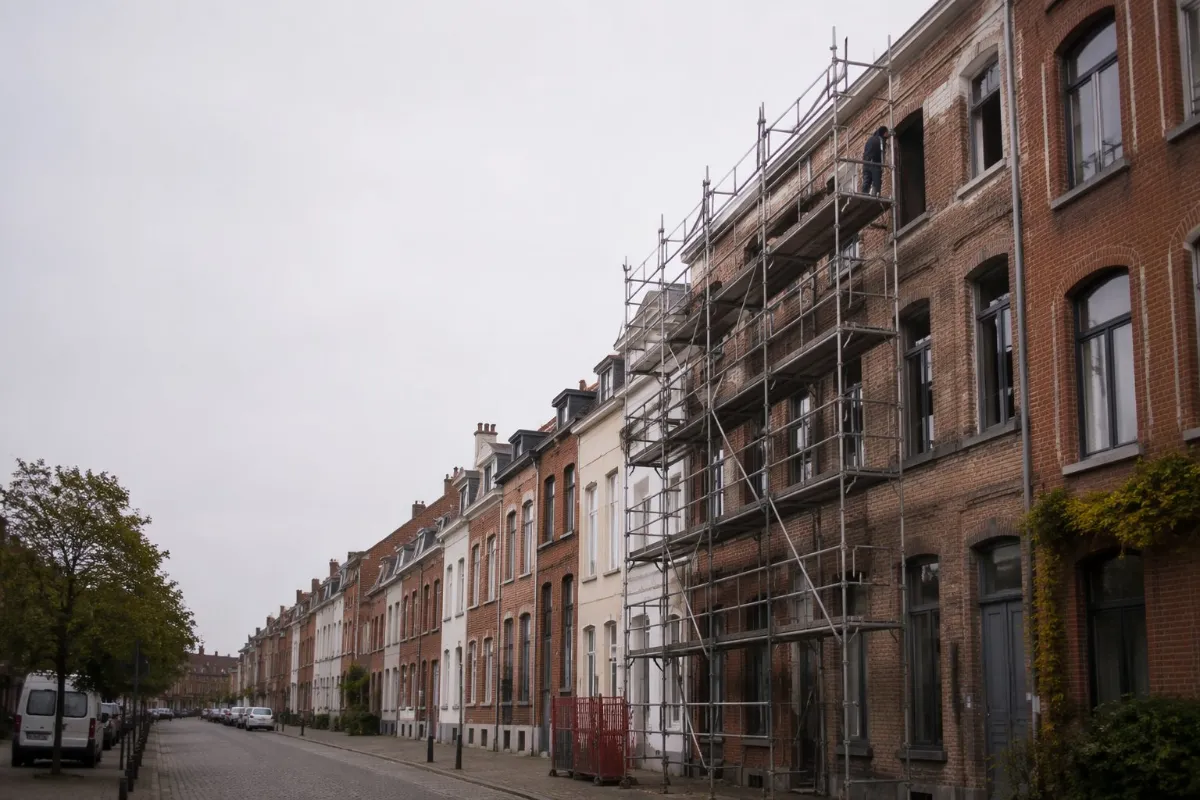
Public liability covers the material damage and bodily injury your business causes to other people in the course of its activity, outside any contract: this is non-contractual liability. It extends intoafter-delivery cover (damage caused once your work is finished) and goods in your care (your clients' property held in your custody). Not to be confused with professional indemnity, which covers professional error in your advice or design work.
-
Non compulsoryNo general law imposes it, but landlords, principals and public tenders almost always require it by contract
-
3 strandsOperations, after-delivery and goods in your care: distinct scopes not to be confused
-
2025Since the new Book 6 of the Civil Code, a subcontractor can be held directly liable by a third party
What is public liability insurance?
Since 1 January 2025, a subcontractor can be sued directly by an injured third party.
The new Book 6 of the Civil Code ends the "quasi-immunity" of the performing agent. All the more reason to check that everyone on site is properly insured.
Public liability, also called business liability, compensates the material damage and bodily injury your activity unintentionally causes to a third party, outside the performance of a contract. This is what is called non-contractual fault : you had no contractual commitment towards the victim, but your activity harmed them. A visitor tripping over an extension lead in your premises, a paint tin falling from scaffolding onto a car, a machine throwing a shard into the neighbouring property: all situations where you can be held liable.
Since 1 January 2025, this liability has been governed by the new Book 6 of the Civil Code, which thoroughly reforms Belgian non-contractual liability law. One change deserves the attention of the self-employed and SMEs: the end of the "quasi-immunity" of the performing agent. In practice, a subcontractor or an employee can now be sued directly by an injured third party, where the old law often shielded them. All the more reason to check that everyone working on a site or a job is properly insured.
Without public liability, it is your assets, business and often personal, that answer the claim. With it, the insurer handles the claim, defends you against the covered claim and compensates the third party, within the limits of the policy. Careful: that defence is confined to the covered dispute. To recover your own costs, act in criminal proceedings or bring a claim yourself, you need extended legal expenses cover, which is separate from public liability.
Public liability or professional indemnity: do not confuse them
This is the most common confusion, and the most expensive. Many self-employed people believe they are covered because they hold "a liability policy". In reality they often have only half of the set-up.
-
Non-contractual fault
Public liability
Covers material damage and bodily injury caused to third parties during your activity, outside the performance of a contract: a client injured in your premises, damage caused in their home, a falling object. It also takes in after-delivery cover and goods in your care.
-
Contractual fault
Professional indemnity
Covers the errors made in your professional work: bad advice, a wrong calculation, an omission, a culpable delay. The loss is usually financial rather than physical, a loss suffered by the client. It is a failure to deliver what you owed under contract.
Depending on your trade you need one, the other, or both. A consultant: mainly Professional indemnity. A shopkeeper or a tradesperson working on site: public liability first. A design office or an installer: often both. This is exactly the kind of judgement call where a broker stops you paying for nothing, or discovering a gap on the day of the claim.
The three strands to tell apart
Behind the words "public liability" sit several covers, each triggered at a different moment of your activity. Confusing them means risking believing something is covered when it is not.
-
1
Operations
The damage caused to third parties in the ordinary life of the business: in your premises, on a site, while travelling, during an event.
-
2
After-delivery
The damage caused to third parties once your work is finished or your product delivered: poor workmanship, faulty installation, a product that causes damage once fitted.
-
3
Goods in your care
The damage you cause to your clients' property held in your custody (a vehicle being repaired, a machine being serviced, jewellery left with you) or to borrowed and hired equipment.
These three strands fit naturally into a single business liability policy. Confusing them, or forgetting one, is where cover gaps are born.
What it does not cover
Exclusions and limits vary appreciably from one insurer to the next. Two policies at the same price can cover very different realities: the real comparison is made on the general conditions, not on the premium.
- × Intentional wrongdoing and fraud.
- × Fines and criminal penalties.
- × Professional error (bad advice, a wrong calculation): that belongs to professional indemnity, not to public liability.
- × Your own property and your own equipment, including goods not yet delivered: they belong to property insurance (fire, theft, machinery breakdown), not to liability cover.
- × Damage falling under another policy: vehicle accidents (motor liability), accidents at work involving your employees (a separate compulsory insurance).
- × Certain specific risks (gradual pollution, hazardous activities) unless an extension is negotiated.
What does public liability cost?
There is no single price: the premium is built on your business's real risk profile. The main levers:
-
Nature of the activityFactor number one. An office pays a fraction of what a construction firm or an exposed manual trade pays.
-
TurnoverOften the main basis of calculation: the higher the turnover, the greater the exposure, and the premium.
-
Payroll & headcountEvery person working on the ground adds to the risk of damaging third parties.
-
Use of subcontractorsSince Book 6, liability down the chain has changed: insurers take it into account (cover, recourse).
-
Extensions chosenAfter-delivery, goods in your care, events, territorial scope: every added cover weighs on the premium.
-
Limits & deductibleA high limit costs more; a higher deductible lowers the premium but increases what you bear yourself.
As an order of magnitude, public liability for a self-employed person or a small business starts at around ~€100 a year for a low-risk office activity, and climbs considerably for manual trades and construction.
Indicative annual premium range: public liability, small business
"On the day of the claim, nobody looks at the price. They look at the scope."
In claims handling I see the same gaps come back again and again: an activity declared too narrowly, an after-delivery extension left out, or goods in your care never taken out even though the whole trade consists in working on clients' property. The most painful claim is the one where the policy exists but does not cover that particular loss. My job is to make the cover fit what actually happens on the ground, not just the label on the activity. A good public liability file is prepared before the claim, not after.
Offices in Ciney, Dinant, Eghezée and Brussels. FSMA-registered broker no. 111917.
Ask a question →The garage owner and the car in his care.
An independent garage owner takes in a car for repair. The vehicle is parked in the workshop, keys on the board, waiting for parts. A short circuit starts during the night: fire, the client's car is destroyed and the one next to it damaged. The garage owner did hold public liability, but without the extension for goods in your care. The vehicle handed over to him was not a "third party" in the classic sense: it was in his custody.
The result: the damage to the car in his care stayed with him. With the right extension, goods in your care included in the policy, the insurer would have compensated the client. That is exactly the check we make when the policy is written: what property passes through your hands, and under which cover.
What people ask us about public liability
Your case is not here? Ask us, and we answer within 48 hours.
Ask my question →-
What is the difference between public liability and professional indemnity?
−It is the nature of the fault that separates them. Public liability covers non-contractual fault: the material damage and bodily injury your activity causes to third parties outside the performance of a contract (a client slipping in your premises, damage caused in their home, a falling object). Professional indemnity covers contractual fault: the error made in your professional work (bad advice, a wrong calculation). Many self-employed people hold one without the other: it is the most common cover gap.
-
Is public liability compulsory in Belgium?
−As a general rule, no: public liability is not imposed by a single law covering every activity. But it is very often required by contract: landlords, principals, public tenders and event organisers all ask for it. Always check your agreements and your lease.
-
I break the equipment I am installing at a client's: is that covered?
−In principle no, and it is a classic cover gap. Until the goods are delivered they are still treated as yours: a kitchen fitter who cracks the hob while installing it breaks his own equipment, not a third party's. Public liability repairs the damage caused to other people, not the loss of your own stock. Two covers exist to fill that gap: property insurance on equipment in transit and during installation, or, depending on the policy, a specific extension for goods being installed. It is a question to ask before the first job, not after the first broken hob.
-
What are after-delivery cover and goods in your care?
−After-delivery cover applies to damage caused to third parties once your work is finished or your product delivered: poor workmanship, faulty installation, a product that causes damage once fitted. Goods in your care covers your clients' property held in your custody (a vehicle being repaired, a machine being serviced, a piece of jewellery left with you) as well as borrowed or hired equipment, when you damage them. These are extensions of public liability, not of professional indemnity.
Public liability cut to your real working life
Describe your activity to us in two minutes. We compare the policies on the market, hunt down the extensions that matter (after-delivery, goods in your care) and propose the right level of cover, neither too much nor too little.
Nathalie Deroppe
Day to day, Nathalie runs the claims files of the self-employed and SMEs at Cinassur. She knows where cover gaps hide, because she sees them close, or fail to close, on the day of the claim. At Cinassur we do not sell a product: we audit your real risk and negotiate the protection that matches it. How we work →
Further reading
- Self-employed & SMEs Professional indemnity The cover for your professional work. →
- Self-employed & SMEs Ten-year liability insurance A separate cover, compulsory in construction. →
- Self-employed & SMEs Business interruption The company's income after a loss. →
This page is for information only and does not constitute personal advice within the meaning of the Belgian Act of 4 April 2014. The amounts, covers and obligations mentioned are indicative and may vary according to the insurer and to changes in regulation. For an analysis tailored to your situation, contact Cinassur.