
Business interruption insurance: your turnover when everything stops
Page reviewed on 16 September 2026 Written by an FSMA-registered broker.
After a fire or water damage, insurance rebuilds your walls. But during the months of closure, customers go elsewhere and the bills keep arriving. Business interruption takes over your income until you are running again: more often than not, it decides whether the company survives the loss.
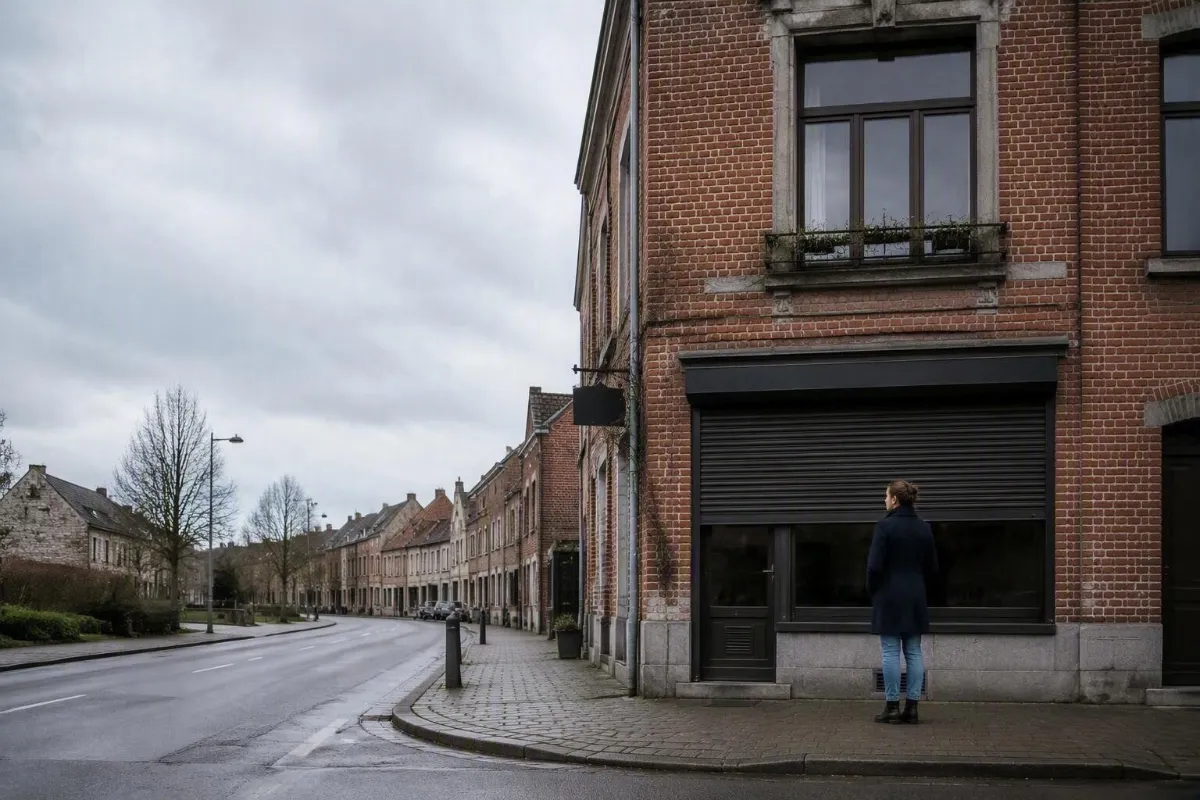
Business interruption makes good the loss of income of your business when covered physical damage (fire, water damage, storm) interrupts or reduces your activity. It takes on your fixed costs (rent, wages, loan repayments) and your lost profit over a defined indemnity period . Two logics exist: an agreed-sum basis (a daily amount) or an indemnity basis (the real loss of gross margin). It is taken out with a fire policy or inside a commercial multi-risk policy. Not to be confused with guaranteed income, which protects the person, not the business.
-
43 %Share of businesses that fail within two years of a major fire, for want of holding on financially during the closure
-
2 logicsAgreed sum (a daily amount) or indemnity (the real loss of gross margin): two ways of paying out, to be chosen according to your trade
-
12 to 36 monthsIndemnity period to be matched to the real time needed to rebuild and win back customers
What is business interruption insurance?
Fire cover puts the company back on its feet. Business interruption keeps it alive while it gets there.
Business interruption cover, sometimes called loss of income or loss of profits, compensates the earnings your business misses out on when physical damage stops it running normally. When your workshop burns, your shop floods or a storm tears off your roof, two things happen at once: your turnover collapses, while your fixed costs keep arriving. Rent, wages, loan repayments, energy, insurance: the bills do not stop because the shutters are down.
It is precisely that mismatch the cover addresses. Where fire insurance repairs the property (the building, the equipment, the stock), business interruption protects the result : it pays you enough to meet your fixed costs and to recover the profit you would have made without the loss. In other words, fire cover puts the company back on its feet; business interruption keeps it alive while it gets there.
In Belgium this cover is not compulsory. It is usually taken out alongside the fire policy or within a commercial multi-risk policy. Optional it may be, but it is strategic: industry observation is that a significant share of businesses hit by a major loss do not survive the following months, not because the walls were never rebuilt, but because the cash ran out.
The trigger: physical damage, not simply a fall in turnover
This is the most misunderstood point, and the source of most nasty surprises. Business interruption does not trigger by itself because your activity slows down. There must be covered physical damage under your fire or property policy, and it must be what causes the interruption. With no covered physical damage, there is no payout.
This triggers it
- Fire, explosion, lightning, smoke: the textbook case.
- Water damage: a burst pipe, seepage.
- Storm, hail, weight of snow.
- Natural disasters (flooding), folded into the Belgian “simple risk” fire regime.
- Glass breakage, electrical damage, vandalism, depending on the extensions in your policy.
This does not
- A drop in footfall.
- An economic downturn.
- The loss of a major customer.
- An administrative closure with no destruction of your property.
This point fed countless disputes during the COVID-19 crisis: many self-employed people believed they were covered, but with no physical damage, a standard business interruption policy did not respond. More on this below.
Agreed sum or indemnity: the two ways of paying out
Not all business interruption cover is calculated the same way. This is the most structural choice in the policy, and the one that must fit your trade and your accounts.
-
The real amount
Indemnity basis
The insurer reconstructs the loss of gross margin: the turnover you would have achieved without the loss is recalculated and your gross margin rate applied. The payout hugs reality closely, but assumes solid accounts and a good estimate of the margin insured. This is the classic logic for shops, workshops and industry with variable costs.
-
The fixed amount
Agreed-sum basis
The insurer pays a fixed daily amount for each day of total interruption (and pro rata if the stoppage is only partial). Simple, quick to settle, with no heavy accounting reconstruction: it appeals to the self-employed and the professions, doctors, physiotherapists, dentists, lawyers, whose “gross margin” is hard to establish but whose lost days are easy to count.
There is no "right" basis in the abstract: there is the one that matches your cost structure. An underestimated daily amount or a badly calibrated gross margin, and the payout will not be enough when the day comes. That is exactly the call a broker makes with you, figures in hand, before you sign.
What it covers in practice
Beyond lost profit, good business interruption cover takes on several items which together keep the company afloat:
-
Fixed costs
Rent, wages and social contributions, loan interest, base energy, insurance, depreciation: the costs that continue once the takings stop.
-
The lost profit
The operating profit you would have made without the loss, over the indemnity period: not just the costs, but the profit forgone.
-
Additional expenses
The spending incurred to limit the loss: temporary premises, hiring replacement equipment, communicating with customers, overtime.
-
Supplier or customer failure
Optional: the earnings lost when a loss at a key supplier or customer deprives you of activity, even though your own premises are untouched.
The exact scope varies from one insurer to the next. Some items are included as standard, others are extensions to negotiate, hence the value of comparing the general conditions, not just the premium.

What it does not cover
During the health crisis, many retailers and hospitality businesses claimed under business interruption. Most policies refused, for want of physical damage : a closure ordered by the authorities destroyed nothing physically. Belgian courts broadly followed that reading. Since then a few insurers offer "administrative closure" or "epidemic" extensions, but they are limited, capped and far from standard. Worth checking line by line if that risk worries you.
- × Losses with no physical damage: a falling market, lost customers, an economic downturn, administrative closure or a pandemic without destruction of your property (unless a specific extension applies).
- × The damage to the property itself: building, equipment, stock. That is repaired by the fire or property policy, not by business interruption.
- × The part of the loss caused by too short an indemnity period or by underinsurance.
- × Intentional wrongdoing, fraud and obvious lack of maintenance.
- × The self-employed person's own incapacity for work: that belongs to guaranteed income, not to business interruption.
- × Purely financial losses (fines, contractual penalties) unconnected to covered physical damage.
The three settings that make all the difference
Two business interruption policies at the same price can leave you in radically different positions on the day of the loss. It all turns on three settings.
-
The sum insuredThe gross margin (indemnity basis) or the daily amount (agreed sum) you declare.Underinsurance: an amount set too low brings in average, and the insurer cuts the payout in the same proportion.
-
The indemnity periodThe maximum time (12, 18, 24, 36 months) during which the insurer makes good the loss after the event.The default 12 months: rebuilding AND winning back customers often takes longer. The cover stops while turnover has not returned.
-
The waiting period and the deductibleThe delay (often in days) before payment starts, or the share you bear yourself.A long waiting period that was never understood: the first days of closure, sometimes the most critical for cash, are not covered.
The indemnity period deserves particular attention. After a serious fire you have to clear the site, obtain permits, rebuild, re-equip, then win back customers who have found other habits. Twelve months go by fast. For many activities, 18 to 24 months is a reasonable floor, and more for trades with heavy rebuilding or a loyal clientele that takes time to rebuild.
Business interruption or guaranteed income: do not confuse them
Both protect "income", hence the confusion, but they cover an entirely different risk, and a different person.
-
The business
Business interruption
Makes good the earnings the company misses out on when physical damage (fire, water damage) stops the activity. The trigger is damage to property. It lives with the fire policy or the commercial multi-risk policy.
-
The person
Guaranteed income
Pays an annuity to the self-employed person in the event of incapacity for work through illness or accident. The trigger is you being at a standstill, not your walls. It is a personal insurance, on top of the state scheme.
Both answer the same worry, "what if I can no longer earn?", but for opposite causes. Most self-employed people need both. See our dedicated page on guaranteed income.
What does business interruption insurance cost?
There is no standard price: the premium is built on your risk profile and on the settings you choose. The main levers:
-
Nature of the activityFactor number one: a practice with little risk of a long closure is not priced like a workshop or heavy-rebuild industry.
-
Gross margin or daily amount insuredThe basis of calculation: the higher the amount to insure, the higher the premium.
-
Indemnity periodGoing from 12 to 24 or 36 months raises the cost appreciably, but also the real security.
-
Waiting period & deductibleA longer waiting period or a higher deductible lowers the premium, in exchange for bearing more yourself.
-
ExtensionsSupplier or customer failure, extended additional expenses, administrative closure: every option weighs on the price.
-
Prevention & claims historyFire detection, sprinklers, premises security and claims history all affect the premium.
Business interruption is usually priced as an addition to the fire policy or inside the commercial multi-risk policy, so its cost is best judged within the policy as a whole rather than on its own. As an order of magnitude, adding the cover is a moderate supplement compared with the turnover it protects, but the differences are real depending on the sum insured and the duration.
Indicative weight of business interruption in the policy, by profile
"The walls are paid for within weeks. It is the company without income that goes under."
Physical damage we know how to handle: fire cover repairs the building. What I see tipping a file over is the aftermath. An indemnity period that is too short and runs out while the shop has not won back its customers. A gross margin set too low which triggers average. A client who discovers, on the day of the loss, that he had fire cover but not business interruption. My job is to work out with you what "holding on for 18 months at a standstill" really means, before it happens, never after.
Offices in Ciney, Dinant, Eghezée and Brussels. FSMA-registered broker no. 111917.
Ask a question →The bakery and the twelve months that were not enough.
A country craft bakery goes up in smoke one winter morning: a short circuit in the bakehouse. The fire policy responds quickly and well, the building and the ovens are rebuilt. The owner also held business interruption, but set at an indemnity period of 12 months, the one offered "by default" years earlier. Between clearing the site, the planning permit, the works and bringing everything up to standard, reopening takes fifteen months. The last three months of costs, and the time needed to win back customers who had gone to the competitor, stayed with him.
A period extended to 18 or 24 months would have covered the whole gap. Since then, every policy we put in place starts from the same question: how long, realistically, to reopen et win the turnover back?
What people ask us about business interruption
Your case is not here? Ask us, and we answer within 48 hours.
Ask my question →-
What triggers business interruption insurance?
−Physical damage covered by your fire or property policy: fire, water damage, storm, breakage, or a natural disaster (folded into the Belgian fire regime). It is that physical loss which interrupts or reduces your activity, and it is what opens the right to compensation. Key point: a simple fall in turnover, a market crisis or a pandemic without physical damage does not trigger the cover. With no covered physical damage, there is no payable business interruption claim.
-
Agreed-sum or indemnity business interruption: which to choose?
−The indemnity basis reconstructs the real loss of gross margin: the turnover you would have achieved without the loss is recalculated and your margin rate applied. It hugs the figures closely, but calls for solid accounts and a good estimate of the margin to insure. The agreed-sum basis pays a fixed daily amount for each day of total interruption (pro rata if the stoppage is partial): simple, quick to settle, it appeals to the self-employed and the professions whose margin is hard to establish. The right choice depends on your cost structure and your trade, exactly the call a broker frames with you.
-
Does business interruption cover a pandemic such as COVID?
−As a general rule, no. Standard cover is triggered by covered physical damage (fire, water damage). An administrative closure linked to a pandemic, with no physical destruction of your property, falls outside that frame: this is what fed many disputes during the COVID-19 crisis. Some insurers offer specific extensions (administrative closure, epidemic, business interruption without physical damage), but they are limited, capped and to be checked case by case in the general conditions.
-
Which indemnity period should you choose?
−The indemnity period is the maximum time, from the date of the loss, during which the insurer makes good your loss: often 12, 18, 24 or 36 months. It has to cover the real time needed to restart (clearing, permits, rebuilding, refitting) AND the winning back of customers who went elsewhere. The classic trap is 12 months: after a serious fire, rebuilding and regaining your level of activity often takes longer. A period that is slightly long beats a policy that stops while turnover has not returned.
-
Are business interruption and guaranteed income the same thing?
−No, they are two different worlds. Business interruption protects the company: it makes good the loss of income when physical damage stops the activity. Guaranteed income protects the person: it pays an annuity if you, the self-employed person, are unfit for work because of illness or an accident. One deals with a building at a standstill, the other replaces your income when you are the one at a standstill. Many self-employed people need both, for different risks.
-
Is business interruption compulsory in Belgium?
−No, no law imposes it. It is an optional cover, most often taken out alongside the fire policy or within a commercial multi-risk policy. That does not make it any less decisive: paying for the walls after a fire is pointless if the company goes under for lack of cash during the months of closure. A landlord or a lender may also recommend it, or even require it, under a commercial lease or a loan.
Let us put a figure on what "holding on at a standstill" means for you
Describe your activity to us. We assess the margin or the daily amount to insure and the right indemnity period, then compare the policies on the market, so that on the day of the loss the cover holds until you are genuinely trading again.
Nathalie Deroppe
Day to day, Nathalie runs the claims files of the self-employed and SMEs at Cinassur. She has followed enough post-fire recoveries to know that real protection is not decided by the premium, but by the duration and the amount genuinely insured. At Cinassur we do not sell a product: we audit your real risk and negotiate the cover that matches it. How we work →
Further reading
- Self-employed & SMEs Public liability The “physical” damage caused to other people. →
- Self-employed & SMEs Guaranteed income Your income if you are unfit for work. →
- Self-employed & SMEs Legal expenses Enforcing your rights without ruining yourself. →
This page is for information only and does not constitute personal advice within the meaning of the Belgian Act of 4 April 2014. The amounts, covers and obligations mentioned are indicative and may vary according to the insurer and to changes in regulation. For an analysis tailored to your situation, contact Cinassur.