
Car insurance in Belgium, at the right level of cover
Page reviewed on 16 September 2026 Written by an FSMA-registered broker.
Third-party liability is compulsory, omnium is not. Everything that matters sits in between: what your car is worth, what you risk paying out of your own pocket, and what actually happens on the day of the accident. We help you pick the level that protects you without overpaying, and we handle the claim alongside you.
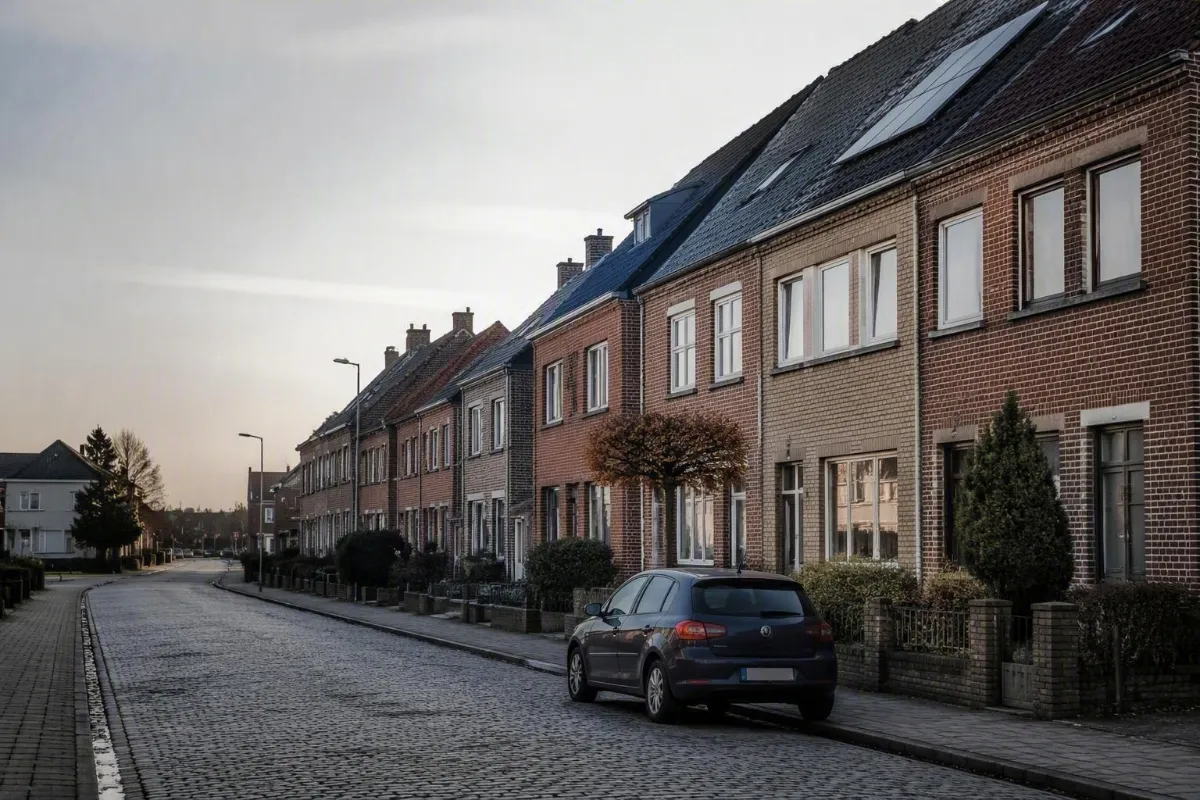
In Belgium, only motor third-party liability cover is compulsory : it pays for the damage you cause to others. To protect your own car, you add an omnium : the mini-omnium (theft, fire, natural forces, glass breakage) or the full omnium which also covers damage to your own car even when you are at fault. The right level depends on theage and value of the vehicle. Around that sit a few decisive settings: bonus-malus, agreed value, deductible, declared driver andassistance cover. Comparing several insurers can move the premium by several hundred euros for identical cover.
-
1 compulsoryThird-party liability is the only car cover required by law (Act of 21 November 1989). Driving without it is a serious offence.
-
3 levelsLiability only, mini-omnium and full omnium: three levels of protection to match your car's value.
-
2004The year the compulsory legal bonus-malus was abolished. Each insurer now applies its own scale of degrees.
Liability, mini-omnium, full omnium: the three levels of cover
Every Belgian car policy is built in layers. You start from the legal minimum, protecting other people, then add, layer by layer, the protection of your own car. Understanding these three levels already tells you what you are paying for and why.
-
Compulsory
motor third-party liability
Covers the damage you cause to others: their car, their injuries, a wall, a pedestrian. This is the floor set by law. It repairs nothing on your own vehicle when you are at fault.
-
+ your car, outside events
Mini-omnium
Adds protection for your vehicle against theft, fire, natural forces and natural disasters, plus glass breakage. It covers neither the damage you cause to your own car in an at-fault accident, nor damage caused by an unidentified third party (vandalism, a car-park knock with no known culprit).
-
+ your own fault
Full omnium
Additionally covers material damage to your car even when you are at fault, plus vandalism. This is the most complete cover, suited to a new, recent or credit-financed vehicle.
-
Damage to other peopleYesYesYes
-
Theft & fire of your carNoYesYes
-
Natural forces, disastersNoYesYes
-
Glass breakageNoYesYes
-
Damage to your car when at faultNoNoYes
-
Vandalism, damage by an unidentified third partyNoNoYes
What each omnium actually includes varies from one insurer to the next: some mini-omniums include vandalism or assistance, others do not. It is the general conditions, not just the premium, that tell you what you are really buying.
Motor liability, the only legal obligation
Act of 21 November 1989 on compulsory liability insurance for motor vehicles.
In Belgium, a vehicle may only be driven on public roads if its civil liability is covered. This comes from the Act of 21 November 1989 on compulsory liability insurance for motor vehicles. Third-party liability compensates the people you injure or whose property you damage : damage to their vehicle, to their belongings and, above all, their bodily injury, the cost of which can be considerable.
Because its minimum content is set by law, basic liability cover is tightly framed : every insurer offers the same starting protection. What sets them apart is the price, the services around it and the optional covers. Two practical points worth knowing:
- The international insurance certificate (the former "green card") proves that your vehicle is insured; your insurer issues it to you and it is used in particular abroad.
- The Belgian Common Guarantee Fund steps in in certain cases where the victim cannot be compensated otherwise, for instance an accident caused by an uninsured or unidentified vehicle.
Driving without liability cover is not mere carelessness: it is an offence carrying heavy penalties (a fine, disqualification from driving) and, in the event of an accident, personal repayment of the sums advanced by the Fund. So the first rule, before any trade-off on omnium, is never to leave a single day without valid liability cover.
Mini-omnium or full omnium: how to choose
This is the most common question, and there is no single answer. The trade-off is between the value of your car et the cost of the cover. The newer and more expensive the car, the more a full omnium makes sense; the older it gets and the more value it loses, the more rational a mini-omnium, or even liability only, becomes.
-
New or recent car
Full omnium almost without exception. A total loss without omnium means the car is gone and the loan keeps running. The agreed value protects the first year.
-
Financed or leased car
Full omnium is often required by the lender or leasing company, to secure the asset until it is paid off.
-
Car aged 4 to 8
The trade-off zone: many switch to a mini-omnium. Compare the omnium premium with the vehicle's real residual value.
-
Older car or low value
When the omnium premium becomes disproportionate, liability only (possibly with assistance and driver protection) is often enough.
A sound yardstick: each year, compare the omnium premium with what your car is genuinely worth today. When the gap stops making sense, it is time to drop a level, a call we make with you at every renewal rather than letting an ill-suited policy run on.

Does bonus-malus still exist?
This is one of the biggest sources of confusion in Belgian car insurance, so let us clear it up. In law, compulsory bonus-malus has not existed since 1st January 2004. Before that date, every insurer applied one common, mandatory scale of 0 to 22 degrees. European rules, holding that the system ran against free competition, ended its compulsory status.
In practice, most insurers have kept a scale of degrees very close to the old one, because it remains a good pricing tool. So people still talk about a "bonus-malus degree", even though it no longer has a single legal basis. The classic logic survives at many insurers:
- The starting point, for private use degree 11
- An at-fault claim +5 degrees
- Each year without an at-fault claim −1 degree
- The lower the degree the lower the premium
The key difference from pre-2004: each insurer now freely sets its own scale, its own step-down rules and the real impact on the premium. Two insurers can treat the same claim very differently. That is exactly why comparing pays: your history is not "worth" the same everywhere, and placing a file well can wipe out the effect of an old claim.
No single legal scale since 2004.
Each insurer sets its own scale and its own impact on the premium. Your history is not worth the same everywhere: that is where comparing pays off.
Agreed value, actual value, list price
In the event of a total loss (a theft with no recovery, a car beyond repair), everything depends on the basis of compensation written into the policy. Three notions not to be confused:
-
List priceThe price of the vehicle when new, options included, at the time of purchase.It serves as the starting reference, but it is not what you are paid years later.
-
Actual valueThe vehicle's value on the day of the claim: list price less depreciation (often monthly).This is the default basis with no specific clause. The gap with the price paid can be wide on a recent car.
-
Agreed valueAn amount agreed in writing with the insurer, guaranteed for a set period (often the first 12 months, sometimes longer).You are compensated at that agreed value, with no depreciation during the period: valuable on a new car.
In concrete terms: on a new car, depreciation in the first years is brutal. Without agreed value, a theft six months after purchase can end in compensation well below what you paid. The agreed-value clause, and its duration, is therefore worth checking closely on any recent vehicle, and one of the few places where policies genuinely differ.
A third parameter, often overlooked, weighs heavily: the reference date from which depreciation is calculated. The very same clause, "24 months without depreciation, then 1% a month", has an entirely different effect depending on whether you count from first registration or from the end of the depreciation-free period. In the first case, the 24 months "catch up" all at once: the insured value can fall by almost a quarter as soon as month 25th . In the second, the decline only starts afterwards, at 1% a month.
Insured value and depreciation: the reference date changes everything
- Counted from the end of the depreciation-free period: a gradual decline
- Counted from first registration: a single drop at month 25
Deductible, young driver, declared driver
At a comparable premium, two omnium policies can leave you in very different positions on the day of the claim. The devil is in three details.
-
Watch-out 01The deductible
The share you bear yourself on every omnium claim. The higher it is, the lower the premium, but the more you pay out of pocket when the day comes. Set it against your ability to absorb a hit, not just against the premium.
-
Watch-out 02The undeclared young driver
If a regular driver under 26 is not named on the policy, many insurers double the deductible for a claim involving that driver. Lending your car often to your child without declaring them can be expensive.
-
Watch-out 03The real main driver
Naming a favourable profile as main driver while someone else actually drives the vehicle is a misrepresentation of the risk, and can be penalised up to a refusal to pay. An honest, solid policy is worth more.
Young drivers logically pay more (no history, statistically higher claims). Several levers can smooth the premium: a suitable deductible, the choice of vehicle, being named as second driver on a parent's policy, targeted covers. Here too the gap between insurers is real: this is a profile where comparing pays off handsomely.
The covers worth checking
Beyond liability / mini / full, a few covers genuinely change daily life when something goes wrong. Worth a close look:
-
Breakdown assistance
Towing and roadside help after an accident or breakdown, sometimes from your own driveway. Check the radius (Belgium, Europe) and whether breakdowns are included, not only accidents.
-
Replacement vehicle
A car lent to you while yours is being repaired, often through an approved repairer and for a capped period. Essential if you depend on your car day to day.
-
Driver protection
Compensates your own bodily injury when you are at fault, a blind spot of liability cover, which only pays other people. The sums insured are sometimes very high.
-
Glass breakage & electric cars
Windscreen repair without necessarily affecting your bonus-malus. On an electric or hybrid car, check that the battery and the charging point are covered.
Each of these can be included, optional or absent depending on the insurer and the level. More often than the standardised liability cover, it is these that make the real quality difference between two policies at a similar price.
After an accident: at fault, not at fault, the direct settlement agreement
What you are paid depends first on liability, established through the accident statement form :
-
01
You are not at fault
The other driver's liability cover pays for your damage. You are not supposed to lose out: no deductible, no impact on your degree.
-
02
You are at fault
Liability cover repairs the damage caused to others; your own damage is only covered if you hold a full omnium (otherwise it stays with you).
-
03
Shared fault
Compensation is split according to each party's share of liability.
To speed things up between insurers, most apply the RDR direct settlement agreement : your own insurer pays you directly for the non-liable share, then recovers from the other insurer. The result: you are paid faster, without waiting for the exchanges between companies to end. A good broker makes sure this machinery works in your favour and that a no-fault accident does not wrongly weigh on your policy.
Thinking of switching insurer ? A car policy can be cancelled at any time after the first year, with two months' notice. See our dedicated guide: cancelling your insurance. But never do so without the new cover in place, so that no day goes by without liability cover.
What does car insurance cost in 2026?
There is no standard price: the premium is built on your profile and on the settings of the policy. The main levers:
-
The vehiclePower, value, engine type (petrol, diesel, electric), theft risk: the first determinant of the premium.
-
The level of coverLiability only, mini-omnium or full omnium: the factor that moves the premium several-fold.
-
The driver's profileAge, how long you have held a licence, claims history (bonus-malus degree): a young driver or a claims-heavy profile pays more.
-
Region & useWhere the car is parked, annual mileage, private or business use all affect the risk and therefore the premium.
-
Deductible & agreed valueA higher deductible lowers the premium; an extended agreed value raises it slightly, but secures what you are paid.
-
The optionsAssistance, replacement vehicle, driver protection: every added cover weighs on the price.
As an order of magnitude, to be confirmed against market rates: liability only on a second-hand car often sits in a range of a few hundred euros a year, while liability + omnium on a recent vehicle climbs considerably higher, past a thousand euros for some profiles. Above all: for identical cover and an identical profile, thegap between insurers can reach several hundred euros a year.
Indicative weight of the premium by level of cover (identical profile)
"The real trap is not the premium. It is discovering your deductible and your agreed value on the day of the accident."
On car insurance everyone looks at the price, and rightly so. But what I see going wrong is the aftermath : a new car stolen with no agreed value, compensated well below the purchase price. A doubled deductible because the 22-year-old son was driving without being declared. A no-fault accident that wrongly weighs on the policy because the direct settlement agreement was never invoked. My job is to compare several insurers for your profile, et to check these settings line by line, and then to be there when it happens, not only when you sign.
Offices in Ciney, Dinant, Eghezée and Brussels. FSMA-registered broker no. 111917.
Ask a question →The new car, the theft, and the 4 000 € gap.
A young couple buy a new city car, financed over five years. They take out a full omnium, a good decision, but without paying attention to the clause on agreed value, left at its minimum duration. Fourteen months later, the car is stolen outside their home and never recovered. The full omnium pays out, but the agreed-value period had expired : compensation is paid on the actual value, depreciation included. The result: several thousand euros less than the loan balance still owed.
An agreed value extended to 24 months, or a "purchase price" cover, would have filled the gap. Since then, on every recent financed car, the first thing we check is the duration of the agreed value, before even talking about the premium.
What people ask us about car insurance
Your case is not here? Ask us, and we answer within 48 hours.
Ask my question →-
Liability, mini-omnium, full omnium: what is the difference?
−Third-party liability is the only compulsory cover: it pays for the damage you cause to others, but nothing on your own car. A mini-omnium adds protection for your vehicle against theft, fire, natural forces, natural disasters and glass breakage, but covers neither the damage you cause to your own car in an at-fault accident, nor damage caused by an unidentified third party such as vandalism. A full omnium additionally covers that damage to your own car, even in an accident for which you are responsible, as well as vandalism and damage by a third party who remains unknown. So you climb three levels: other people, then your car against outside events, then your car against your own fault and against damage with no identified culprit.
-
Does bonus-malus still exist in Belgium?
−In law, no. The compulsory, uniform bonus-malus system was abolished on 1 January 2004 under pressure from European rules. In practice, most insurers kept a scale of degrees very close to the old one (often 0 to 22, starting at degree 11 for private use). The classic logic survives: an at-fault claim generally moves you up several degrees, and each claim-free year moves you down one. But since there is no longer a single legal rule, each insurer freely sets its own scale and the real impact on the premium. Hence the value of comparing: two insurers do not treat the same profile the same way.
-
Do you need an omnium for a car more than five years old?
−There is no absolute rule; it is a trade-off between the car's value and the cost of the cover. On a new or recent vehicle, or one financed by a loan, a full omnium is almost always justified: a total loss without omnium means the car is gone and the loan keeps running. After four or five years, many drivers switch to a mini-omnium (theft, fire, natural forces, glass breakage), or even liability only when the residual value is low. A sound yardstick: compare the annual omnium premium with what your car is genuinely worth today. When the premium becomes disproportionate to the value, it is time to drop a level.
-
What is the agreed value?
−The agreed value is an amount set and accepted in writing between you and the insurer when the policy is taken out, which serves as the basis of compensation in the event of a total loss. Its benefit: for a defined period (often the first twelve months, sometimes longer depending on the policy), the car is compensated at that agreed value, with no depreciation. This is particularly useful on a new car, which loses value very fast in the first years. Without an agreed value, compensation is generally paid on the actual value on the day of the claim (list price less monthly depreciation), which can leave a wide gap with what you paid.
-
Does my policy cover an occasional driver or my child as a young driver?
−In principle, liability cover follows the vehicle: it covers third parties whoever the authorised driver is. But watch two points. First, if a regular driver under 26 is not declared on the policy, many insurers double the omnium deductible for a claim involving that driver. Second, regularly lending your car to an undeclared young driver can be treated as a misrepresentation of the risk. The right reflex: declare the real main driver and report a young driver who uses the vehicle frequently. It costs a little more, but it avoids a nasty surprise on compensation on the day of the claim.
-
What does car insurance cost in Belgium in 2026?
−There is no standard price: the premium depends on the vehicle, the driver's profile, the region, the use and above all the level of cover chosen. As an indication, to be confirmed against market rates, liability only on a second-hand car often sits in a range of a few hundred euros a year, while liability plus omnium on a recent vehicle climbs considerably higher, past a thousand euros for some profiles. For the same profile and the same cover, the premium gap between Belgian insurers can exceed several hundred euros a year. That is precisely what a broker does: compare several insurers for a given profile, rather than stopping at a single quote.
-
How do you switch car insurer?
−Since the reform came into force, a car policy can be cancelled at any time after the first year, with two months' notice sent by registered letter, email or bailiff. Before that, ordinary cancellation takes effect at the annual renewal date, also with two months' notice. In practice, it is better to have the new cover in place before cancelling the old one, so that no day passes without insurance: driving without liability cover is a serious offence. A broker handles the switch end to end: comparison, taking out the new policy and cancelling the old one on the right date, with no gap in cover.
The right cover, at the right price, for your car
Tell us about your vehicle and your profile. We compare several insurers, set the level of cover, the deductible and the agreed value that suit you, and stay alongside you on the day of the claim.
Théo Gillard
Théo looks after Cinassur clients' everyday insurance: car, home, family. He has seen enough motor files to know that real protection is not decided by the headline premium, but by the deductible, the agreed value and the way the claim is handled. At Cinassur we do not sell a product: we compare the market and negotiate the cover that genuinely matches your situation. How we work →
Further reading
- Guides Cancelling your insurance Switching car insurer without a gap in cover. →
- Individuals Personal insurance All our solutions for individuals. →
- Quote request Request a car insurance quote A broker comparing several insurers. →
This page is for information only and does not constitute personal advice within the meaning of the Belgian Act of 4 April 2014. The amounts, covers and obligations mentioned are indicative and may vary according to the insurer and to changes in regulation. For an analysis tailored to your situation, contact Cinassur.